
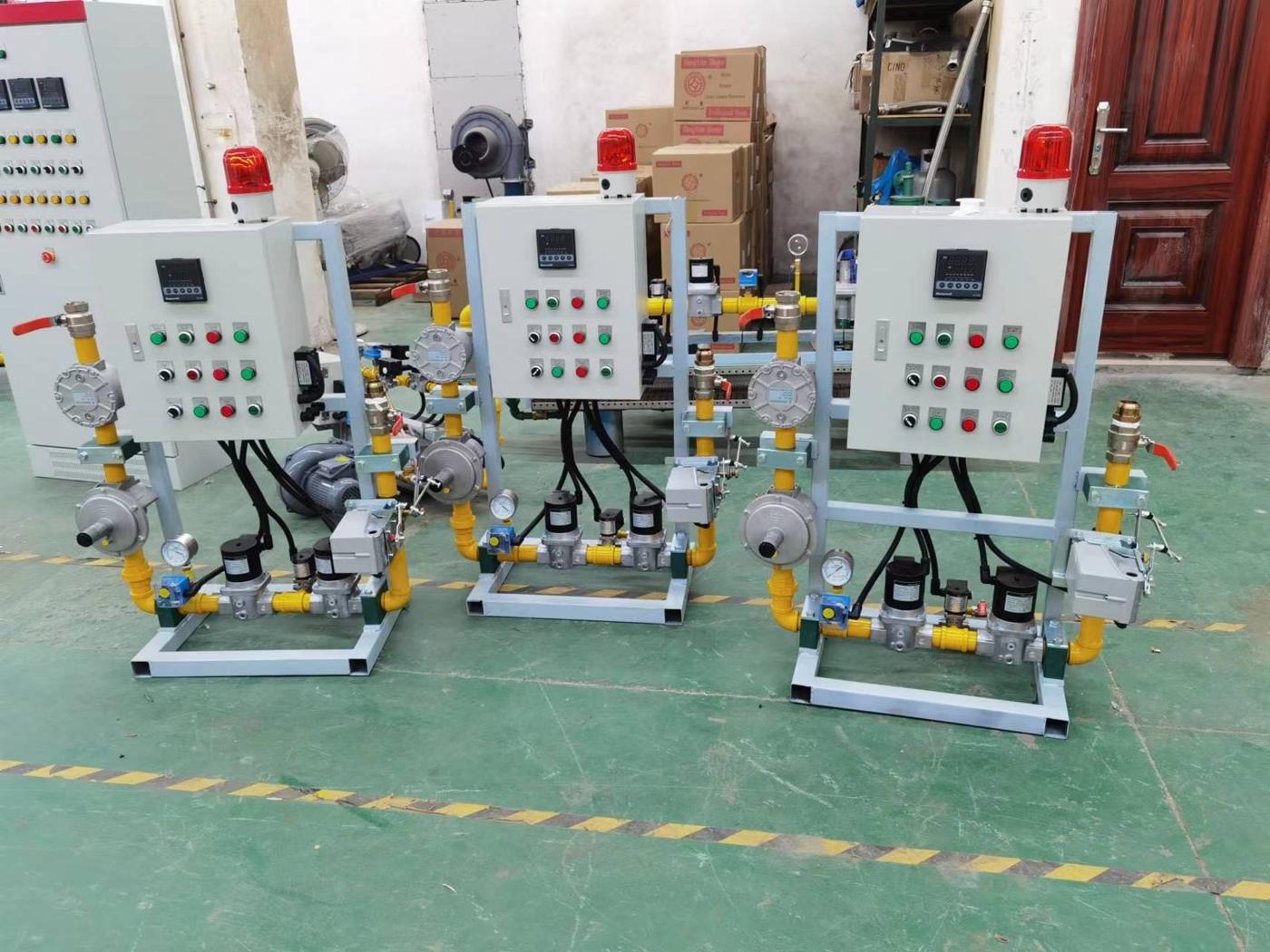
A safety shut-off valve can close on command and still leak: a speck of welding slag on the seat, a worn seal or a damaged disc is enough. With two valves in series a single leaking valve is covered by the other, but only if someone finds out the first one is leaking. If nobody checks, the train can run for months on one good valve without anyone knowing. Gas then reaches the combustion chamber while the burner is off, and the next start-up becomes the dangerous moment.
A valve proving system (VPS, also called tightness control) checks the space between the two safety valves automatically, usually before every start or after every shut-down. A pressure-based VPS works in two steps:
If either test fails, the VPS stops the start-up and locks out. Some units use a small built-in pump to pressurise the space instead of opening the upstream valve. The test time depends on the volume between the valves, the gas pressure and the leak rate the system is set to detect, which is why the VPS has to be set up for the actual train rather than left at factory settings.
| Standard | What it asks for (summary) |
|---|---|
| EN 746-2 (industrial thermoprocessing equipment) | A valve proving system is mandatory above 1,200 kW heat input. |
| EN 676 (automatic forced-draught gas burners) | A valve proving system is mandatory above 1,200 kW. |
| EN 1643 | The product standard a VPS itself has to be certified to. |
| NFPA 86 (ovens and furnaces, 2019 edition) | Above 400,000 Btu/h (about 117 kW): two safety shut-off valves in series with local position indication, plus a proof-of-closure switch on one valve or a valve proving system. Seat leakage testing of the safety valves, and of any VPS, at least once a year to the valve maker's procedure. |
This is a summary, not the text of the standards. The edition your plant, insurer or authority applies is what counts, and some insurers ask for more than the minimum.
Even with a VPS, many sites run a manual leak test once a year, and on older trains without a VPS it is the only check. The usual method uses the small test cocks fitted after each safety valve:
Follow the valve manufacturer's procedure and allowable leak rate for the exact valve, and only let trained staff do the test.
We build gas trains with test cocks and a valve proving system where the rating calls for one, and we renew old trains. See gas train components explained and our gas trains and control panels.
A nameplate photo, or your heat load, fuel and gas pressure. The reply comes from an engineer.
WhatsApp an engineer → [email protected]