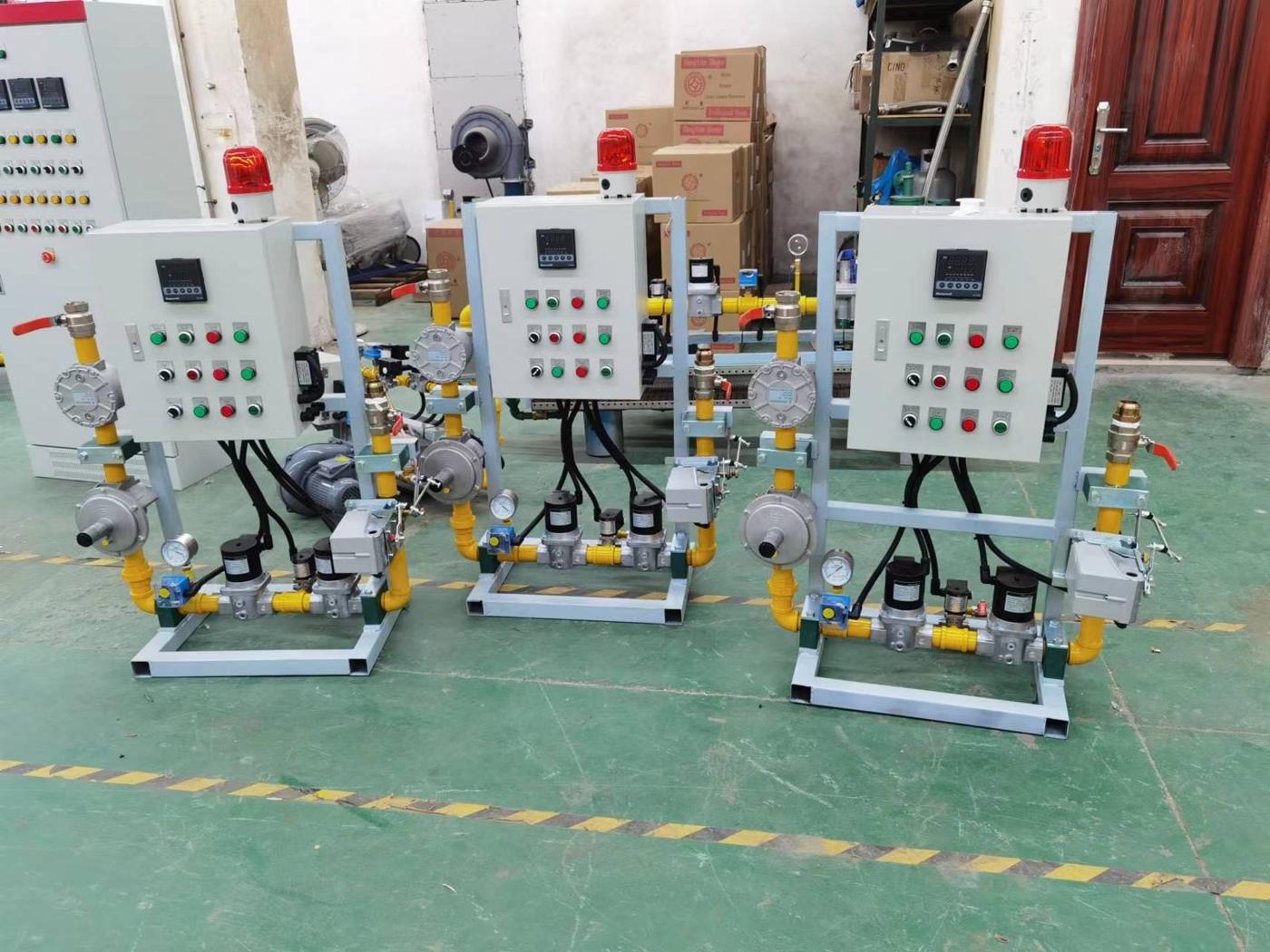
A quarter-turn ball valve that lets maintenance staff shut off and lock out the burner.
Catches pipe scale, welding debris and dust before they reach the valve seats. Dirt on a safety valve seat is a common cause of leaks and failed valve-proving tests. Many filters have pressure test points, so a blocked element can be spotted from the pressure drop.
Reduces the supply pressure to a steady pressure the burner is set up for, so the flame does not change when other users on the line start and stop.
The low switch stops the burner if supply pressure falls too far for a stable flame. The high switch stops it if the regulator fails open. Both are in the safety chain.
Two fast-closing valves in series, both closed whenever the burner is not firing. If one fails to close, the other still stops the gas. Industrial combustion standards such as EN 746-2 and NFPA 86 require this arrangement for most burners.
Before start-up or after shut-down, a proving system checks that both safety valves are actually sealing by monitoring pressure in the space between them. Whether it is mandatory depends on the burner size and the standard applied.
A butterfly valve, usually driven by the same actuator as the air damper or by a ratio regulator, that sets the firing rate and keeps the gas-to-air ratio right across the range.
Burners lit by a pilot have a small parallel line with its own valves.
We build complete gas trains and renew old ones. Gas trains and control panels
A nameplate photo, or your heat load, fuel and gas pressure. The reply comes from an engineer.
WhatsApp an engineer → [email protected]