In a regenerative thermal oxidizer the ceramic beds recover most of the heat, and once the solvent load is high enough the unit can run with the burner almost off. So the burner's hardest job is not full fire. It is heating the chamber up from cold, then holding temperature steadily at very low fire for weeks at a time.
Safety first. An oxidizer burns a mixture that may already contain flammable vapour. Burner selection, purge and interlocks must follow the applicable standard (for example NFPA 86 or EN 746-2) and be designed and commissioned by qualified people.
A burner sized only for start-up spends its life at a few percent of capacity. That is why the next point matters more than the nameplate rating.
A turndown of 10:1 is the minimum worth considering; 20:1 or more makes life easier. At low fire the flame must stay stable and attached, with clean combustion, in a chamber where gas velocities and temperatures change as the valves switch beds. See turndown ratio explained.
Because the chamber is already hot, a burner that fires with excess air or staged combustion keeps NOx down. The burner is rarely the main NOx source in a well-run RTO, but local limits should be checked at the design stage.
Some RTOs add natural gas directly into the inlet air at low concentration instead of firing a burner during operation, and keep the burner only for start-up. It cuts burner run time but needs careful control of the gas concentration. Many designs use both.
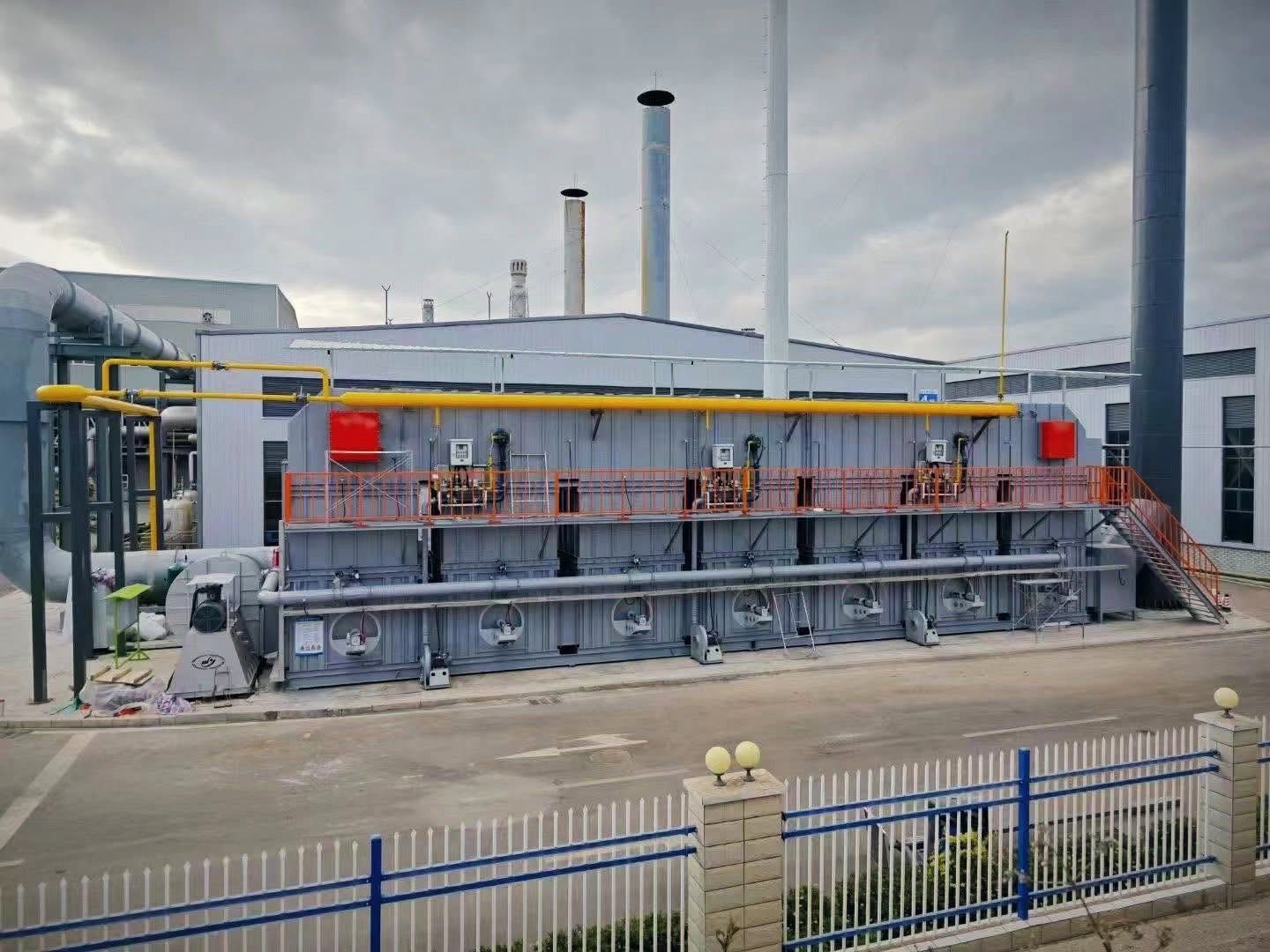
SENNISI builds RTO burner packages: high-turndown nozzle-mix burners, gas trains with valve proving and burner control panels, assembled and test-fired here before shipping. See burners for RTOs and thermal oxidizers and the large RTO project.
Have an oxidizer project? Send the air flow, solvent load, chamber temperature and gas supply on WhatsApp and we'll come back with a burner selection, gas train drawing and price.
For the heat needed to bring the ceramic beds to temperature at start-up and to hold the combustion chamber temperature at the lowest VOC load, with margin for heat losses.
Once VOCs supply most of the heat, the burner runs at very low fire; a high turndown burner avoids cycling on and off.
Self-checking UV scanners are common because the burner runs continuously for long periods.
A nameplate photo, or your heat load, fuel and gas pressure. The reply comes from an engineer.
WhatsApp an engineer → [email protected]