
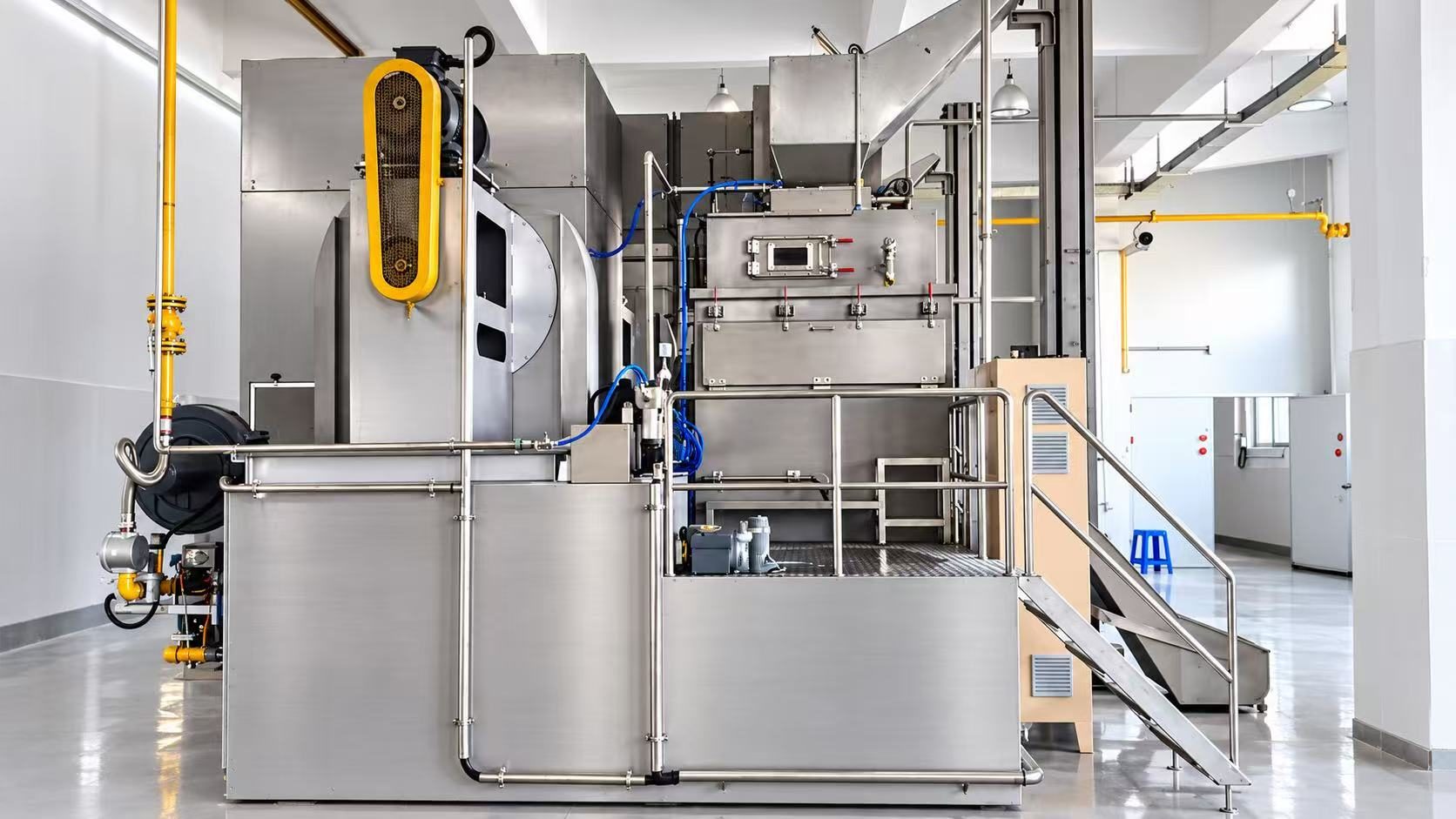
Most rotary dryers for sand, aggregates, minerals and fertiliser are direct-fired: the burner fires into a combustion chamber or straight into the drum, and the hot gas passes over the tumbling product. Where flue gas must not touch the product, as with some food and feed products, the air is heated in a heat exchanger instead. Direct firing is simpler and more efficient; indirect firing is cleaner for the product.
The heat load is set by how much water has to be evaporated, plus heating the product and the dryer losses. In outline:
The method is the same as for any dryer; there is a worked example in how to size a burner for a dryer or oven. Getting the moisture figures from real samples matters more than any margin added afterwards.
Feed rate and moisture change through the day. A burner that can only fire between full and half load will overshoot when the feed is dry and cycle on and off when the plant slows down. Each restart means a purge that pushes cold air through the drum. A burner with wide turndown and modulating control holds the exhaust temperature steady, and that is what keeps the product moisture on target. More in burner turndown ratio explained.
Natural gas is the cleanest and easiest to control. LPG behaves much the same with different pressures and orifices (see natural gas vs LPG). Diesel and heavy oil are used where there is no gas supply; they need atomisation, fuel heating for heavier grades, and more maintenance. Dual-fuel burners let a plant switch when gas is interrupted.
We supply packaged and high-velocity burners, gas trains and control panels for rotary dryers. Send us the product, throughput, inlet and outlet moisture and the fuel on site. See burners for dryers and curing ovens.
A nameplate photo, or your heat load, fuel and gas pressure. The reply comes from an engineer.
WhatsApp an engineer → [email protected]