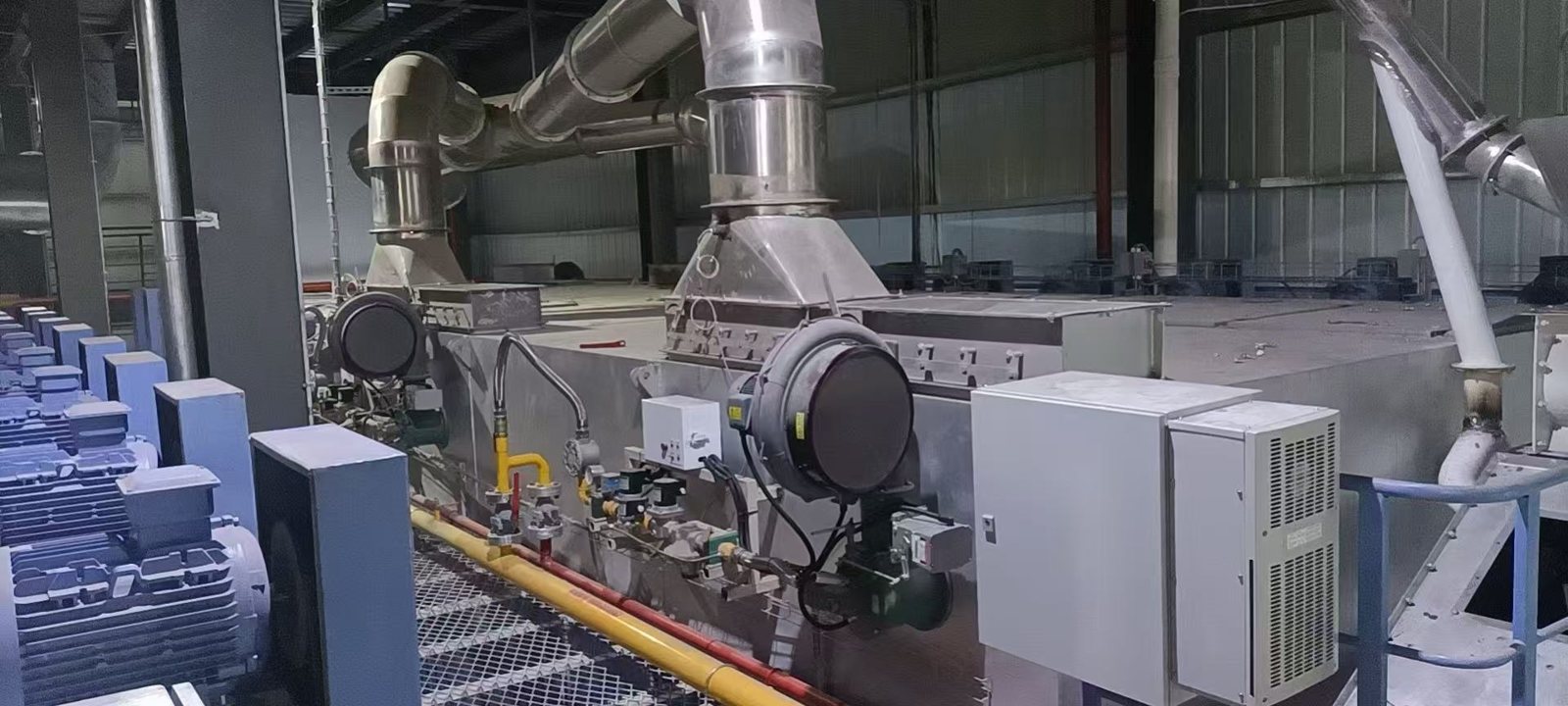
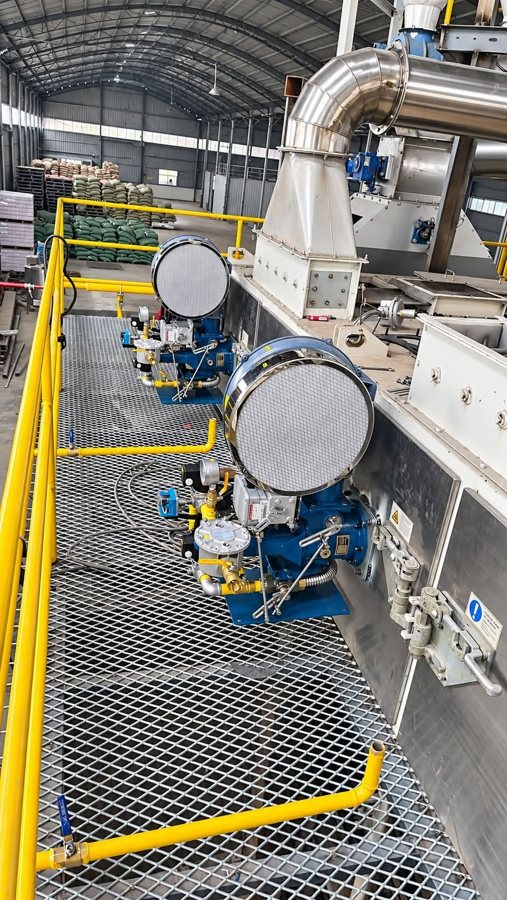
A large feed dryer is not heated by one burner. A multi-layer belt dryer for extruded aquafeed or pellet feed is split into zones, and each zone usually has its own burner, gas train and temperature controller. One dryer can carry six to a dozen burners.
Wet feed leaves the extruder or conditioner with a lot of water to remove. The first zones do most of the evaporation and need the hottest air; the last zones only finish the moisture and need gentle heat so the pellets do not crack or lose quality. Separate burners per zone let the operator set each temperature on its own and keep the final moisture steady when the recipe or throughput changes.
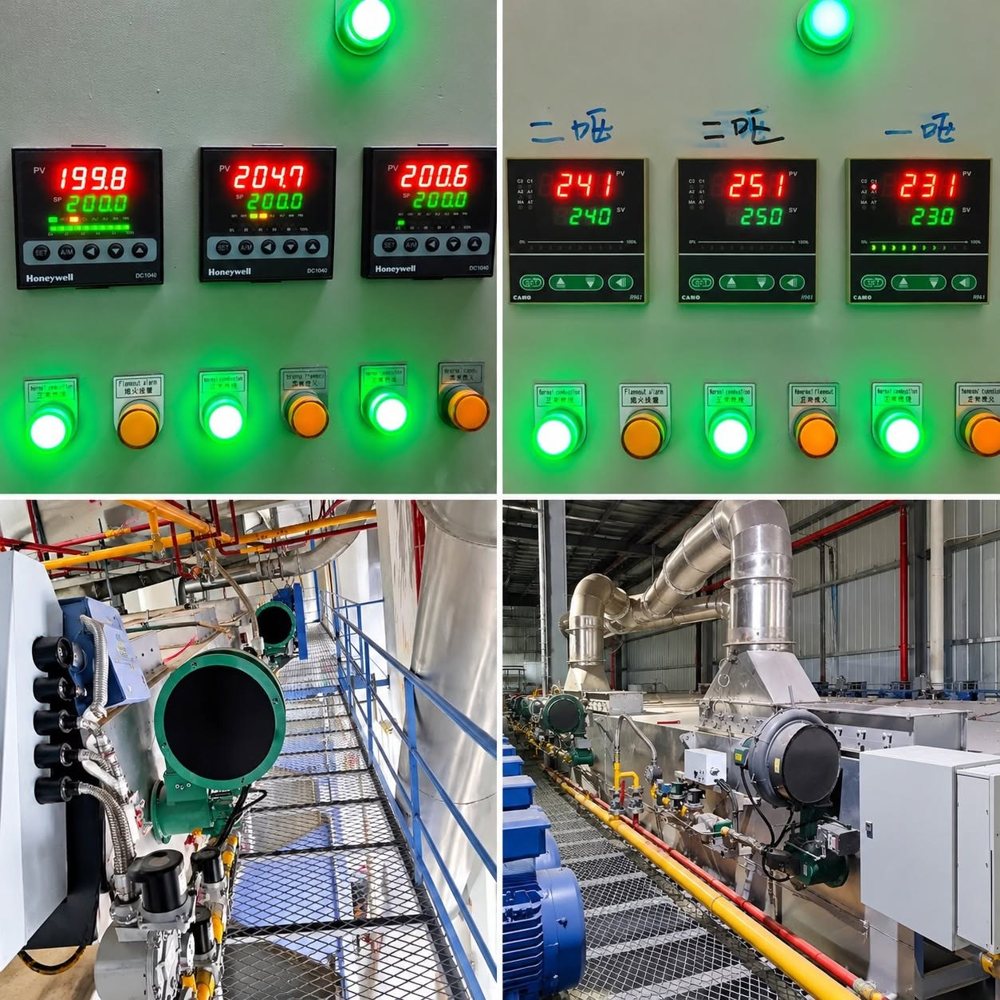
Each zone controller drives its burner in proportion to the air temperature, so the burner turns down as the zone reaches set point instead of switching on and off. On the panel above, three zones hold 200 °C within about 5 °C, and a second dryer runs 230, 240 and 250 °C zone by zone. Smooth turndown keeps the air temperature stable and saves gas on long production runs.
Most feed dryers we work on are direct-fired on natural gas or LPG: the clean combustion gas mixes with the circulating air. Where the feed producer or the end market asks for clean air only, the burner fires into a heat exchanger instead. Hot-air furnaces and heat exchangers
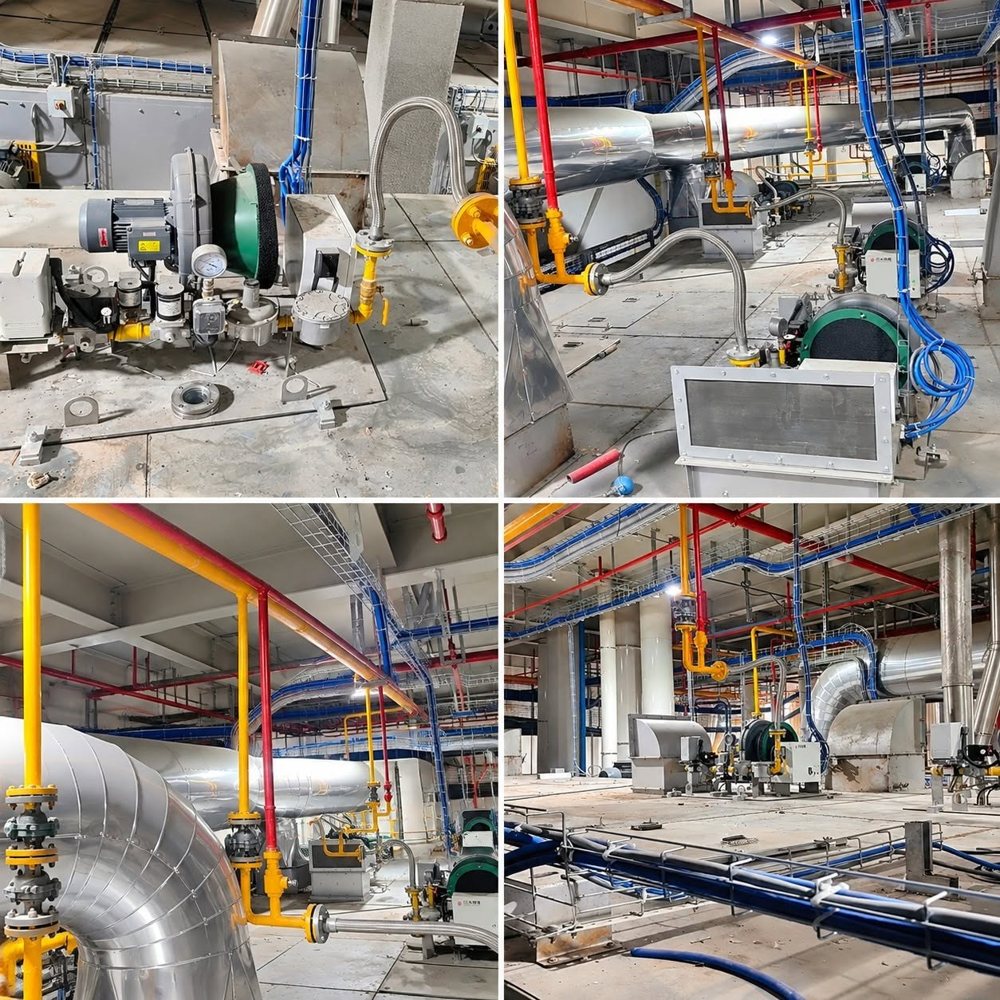
We supply dryer manufacturers with burner sets matched to each dryer model, and feed mills with replacement burners and spare parts for dryers already running. Every burner and gas train is test-fired in our workshop before shipping.
A nameplate photo, or your heat load, fuel and gas pressure. The reply comes from an engineer.
WhatsApp an engineer → [email protected]