
In a kiln or heat-treatment furnace the question is rarely how much heat, but how evenly it reaches the load. That is a burner-selection problem as much as a furnace-design one.
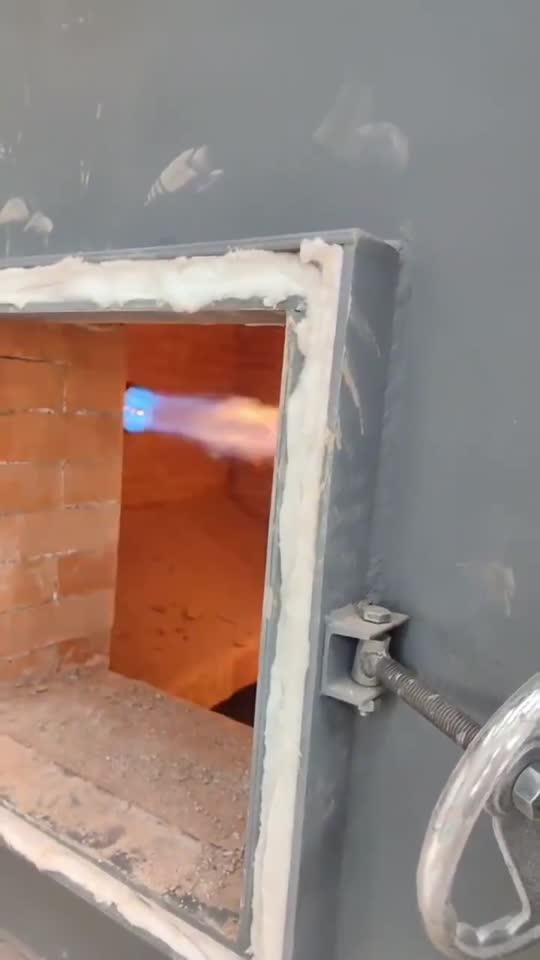
High-velocity burners fire hot gas into the chamber fast enough to pull furnace gas along with it. The stirring effect evens out temperature across a dense setting. This is why kilns and batch heat-treatment furnaces commonly use them. TJ Series high-velocity burners
Many furnaces hold uniformity at low load by pulse firing: each burner runs either at high fire or low fire, and the controller varies the time at each. The jet velocity stays high even when the average heat input is low. This needs burners and valves rated for frequent cycling, and a controller set up for it.
Some processes want excess air to lower flame temperature during heat-up; others need near-stoichiometric firing to limit scaling. Nozzle-mix burners can run across that range, with ratio control through the air and gas valves.
Older kilns and furnaces often run burners whose parts are becoming hard to get. We match firing rate and mounting and renew the gas train and controls at the same time. See replacement burners.
A nameplate photo, or your heat load, fuel and gas pressure. The reply comes from an engineer.
WhatsApp an engineer → [email protected]